A Molted Lobster, a Deal with OpenAI, and the Most Expensive Branding Lesson You'll Never Learn From
The moment your name starts doing the job of a description, it stops doing the job of a name.
Peter Steinberger just announced he's joining OpenAI to work on bringing agents to everyone, and the OpenClaw project he built is moving to a foundation to stay open and independent. It went from a solo developer's open-source experiment to one of the biggest stories in AI in a matter of weeks. Congratulations to him. Genuinely. That is a spectacular outcome by any measure.
It is also, for the rest of us, a masterclass in how not to name a company, and a reminder that surviving your own branding mistakes is the exception, not the rule.
Names Don't Describe. They Distinguish.
This is the most counterintuitive thing founders get wrong, and it's the thing I spend more time explaining than almost anything else in a brand counseling session.
When you name a product or a company, you are not writing a description of what it does. You are creating a signal: something that points to you and only you, something that separates you from everyone else in the room. The moment your name starts doing the job of a description, it stops doing the job of a name.
Don Draper said it better than I can: "Success comes from standing out, not fitting in."
Descriptive names blend in. That's their job. And if it's descriptive, it's not a name.
The MVD Pronto Problem (Why You're Paying for Everyone Else's Marketing)
Drive around any mid-sized city in a state that permits private motor vehicle service companies. You'll find a half-dozen storefronts competing for the same registration renewal and license business. Every single one of them is named some variation of Quick MVD, Fast DMV, Express MVD, EZ DMV.
I have watched customers walk into the wrong one. I have watched people argue about which one they used last time. I have personally seen someone try to describe one of these businesses to its own owner and use a competitor's name. The owner didn't even blink, because it happens constantly.
If your name is so similar to your competitors that customers can't remember the difference, every dollar you spend on marketing goes into a shared pool, if you're lucky. You're not building your brand. You're building awareness for the category, and everyone in the category gets to enjoy it. You are, in effect, advertising for your competition.
This is not a "small" business problem. It scales. Badly.
Eighty Platforms, Few Names
I work at the intersection of law and technology. Right now, if you go looking for AI tools built specifically for lawyers, you will find more than eighty platforms vying for attention and wallet share from the same pool of overworked, skeptical attorneys.
A remarkable number of them are named some combination or variation of jagon that sounds like: Lawyer.ai, LegalBot, AgenticJD, AI Esquire, RoboCounselor, and Juris+AI (to generalize a few).
Every one of those names is telling the customer what it is, not who it is. Every one of those names shares phonetic and semantic space with every other name in the category. And every one of those founders is wondering why awareness is so hard to build. It's not hard to build. You're just building it for everyone. Do think your investors notice?
The Claw Problem
Back to OpenClaw. The name history is even richer than most people know, and it reads like a case study I could hand to a first-year associate.
The project launched in November 2025 as Clawdbot, a deliberate lobster-themed pun on Anthropic's Claude AI. That detail matters. This was not an accidental similarity. Steinberger knew what he was doing and leaned into it. It was clever. It was also a problem waiting to happen.
Clawdbot. The dominant element is claw, derived directly from Claude. The suffix bot tells a customer approximately nothing. Every automation tool, every AI assistant, every chatbot on the market has some variation of bot in its name or branding. You cannot own it. It differentiates nothing. And the base word, said aloud at a conference, in a hallway, over the phone, is phonetically indistinguishable from one of the largest AI foundation models on the planet.
In January 2026, Anthropic reached out by email. No lawyers, no cease-and-desist letter. As Steinberger later described it: "They didn't send their lawyers. They sent someone internally. Kudos, they were really nice." He complied immediately. Good move Peter.
That is about as graceful as this situation ever gets. And it is still a forced rename of a viral project with tens of thousands of GitHub stars, executed under pressure, with no runway to think it through. If you thing the hard dollars of rebranding is expensive, wait till you pay to reaquire the customers you already earned.
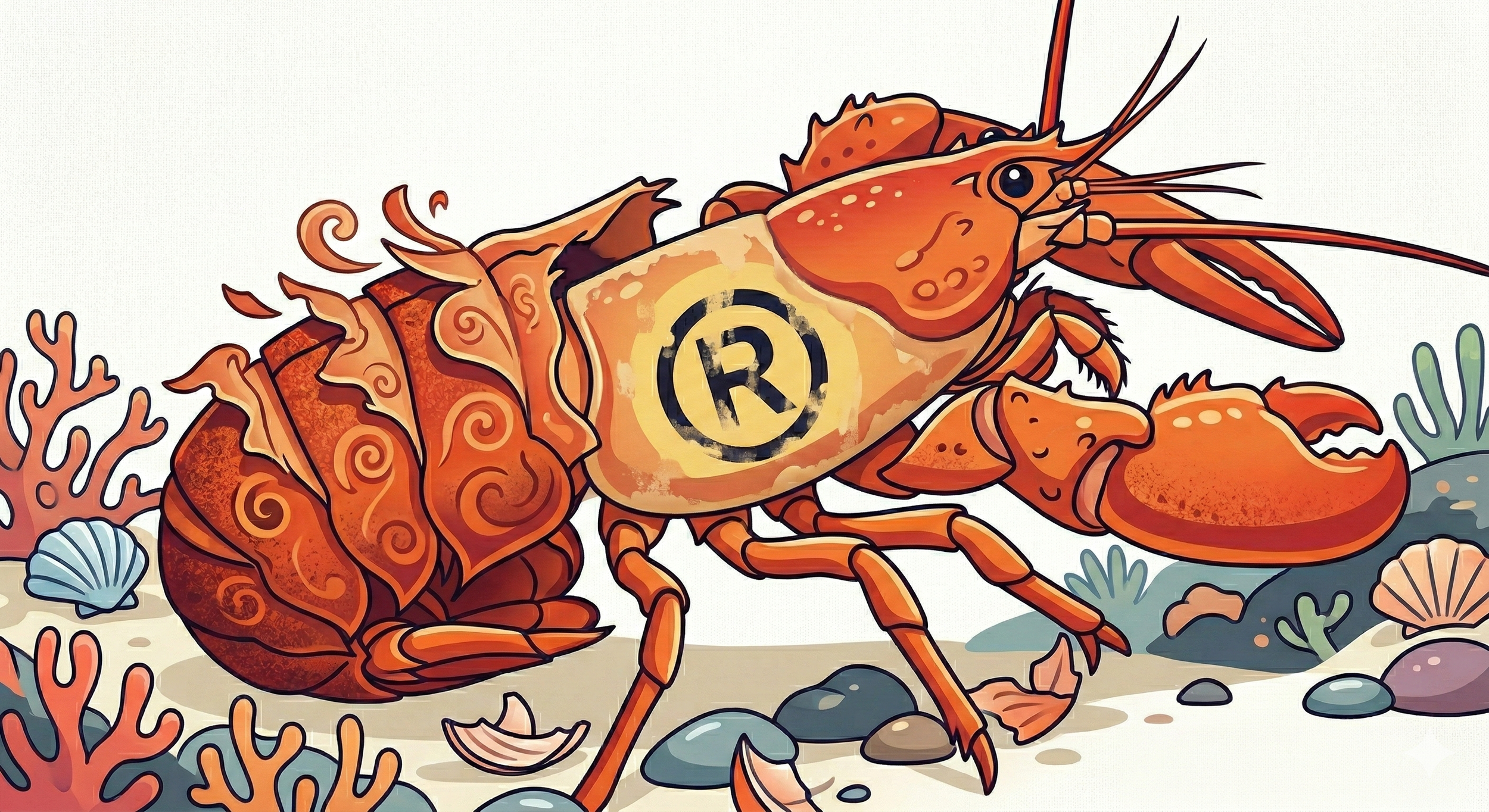
Moltbot. The pivot to Moltbot was conceptually clever. Lobsters molt their shells to grow; the metaphor for an evolving AI agent is right there. Steinberger even framed it as "same lobster soul, new shell." But a name that requires that much explanation has already failed its primary job. The rebrand day was, in Steinberger's own words, a situation where "everything that could have gone wrong today went wrong." The X handle was immediately snapped up by crypto scammers. Impersonation campaigns launched under the old name. Fake tokens appeared. Rapid rebranding is not free. The costs are just harder to put on an invoice.
OpenClaw. Three days after Moltbot, Steinberger announced the final name, saying Moltbot "never quite rolled off the tongue." Open is everywhere. Open source. Open architecture. OpenAI. It is a modifier that developers understand and everyone else ignores. It adds nothing distinctive to the brand and borrows heavily from a name, OpenAI, that Steinberger is now literally working for.
The dominant element, after all the stripping away, is still Claw.
The One Thing They Got Right
The lobster.
I'll be honest: I cannot draw a clean line from crustacean to agentic AI infrastructure. But I don't need to. That's the point. A lobster is 100% distinctive for a tech company. Nobody else is using it. Nobody is going to confuse it with a competitor. It is weird and memorable and it sticks.
If the visual identity had been a robot, a circuit board, a brain, or any other "AI company" visual cliché, we wouldn't even be talking about it. The lobster is the one moment in this brand's history where someone zigged when everything else zagged.
What I Would Have Done
Had a founder come to me before launch with this name, and they often do, here's how that conversation goes:
I have a couple of custom AI tools I use to help organize the threshold analysis: searching for phonetic confusion risks, pulling trademark availability, flagging descriptive terms that won't hold up. My tool and research would have flagged claw/Claude as a potential confusion risk almost immediately.
But that part is increasingly table stakes. The part that still requires a lawyer, the part that machines genuinely have a hard time replicating, is what comes next.
You sit across from the founder. You tell them something they don't want to hear. You explain that the name they have fallen in love with, the name they've been using internally for six months, the name on the pitch deck they showed to investors, is working against them. You show them why. And then you help them find a better one.
Most founders, when they hear it framed honestly and specifically, are grateful. They came in defensive and they leave relieved. A few ignore the advice. Those are usually the ones who come back later, when the company has grown, when a cease-and-desist arrives, when they're raising a Series B and due diligence surfaces the problem, and the fix is considerably more expensive than it would have been at the start.
Peter Steinberger is a genuinely talented developer who built something remarkable and moved fast enough that none of the branding problems caught up with him. If you are one of the very few who, in a matter of months, builds something so singular that it captures virtually all the attention from a small but intensely relevant community, you have room to make a lot of branding mistakes. That is a rare thing. For the rest of us building companies that have to win in the market over years rather than weeks, the name you choose on day one is an asset or a liability. There is no neutral.
Seth Gardenswartz is the founder of Blackgarden Law, a corporate, finance, and IP practice. He counsels clients on brand strategy, trademark clearance, and technology transactions.
Learn how to protect your kickass brand in < 60 minutes
Are you starting or building a brand and looking to maximize its value? Learn all the basics of trademark and brand protection in this 60-second webinar replay
What you’ll learn from the replay
Recorded with Psychedigital in December 2025, we cover practical steps to move from “cool idea” to ownable asset.
What makes a brand truly protectable, and what to avoid when naming things.
Why familiar, “safe” names often fail basic legal tests.
How to future-proof your mark so it scales with the business.
Where trademarks fit, in plain English, so you can brief your designer and your lawyer with confidence.
A quick thank-you to Psych Digital
Psych Digital produced the deck and hosted the live Q&A. They turned the whole thing into a clean replay so you can share it with your team. It is free for everyone. Psychedigital simply asks that you sign up on their site to watch.
Who this is for
Startups naming a product or parent company.
Marketing teams planning a refresh in 2026.
Operators who want the checklist before they file anything.
Brand is a business asset. If you build it to be defensible now, you will save time and money later. Watch the session, take notes, and share it with the person who picks names at your company.

Brand Refresh Regret
Brand updates sound harmless, until the USPTO asks for a renewal specimen that matches the mark you filed 5 years ago. Close is not enough. Here is how to refresh a logo without putting your registration at risk.
You modernized your tired, old logo, tightened the font, and cleaned up the colors. The update looks sharp across your site, packaging, and social headers. Two years later, the five-year maintenance window arrives. Your lawyer asks for a specimen of the mark as filed, not the glow-up. You search old folders. You find only the new art on every surface. That is the moment many owners realize a brand refresh can put a registration on the line.
Why does this happen? Many businesses register a word + design (“stylized”) mark because it is cheaper, may avoid a conflict (word marks are generally more valuable and broader but harder to get), or feels complete. Over time, brands evolve. A designer updates kerning. A product team adjusts the label hierarchy. A web refresh standardizes color. None of this feels like a new mark. The problem is that trademark maintenance, starting at the Section 8 and 15 filings, requires proof of current use of the same mark you registered. Not a near match. Not a family resemblance. If the commercial impression changed, the USPTO can refuse the specimen.
Once a company rolls out the new look everywhere, the old version often disappears from the market. No labels left in inventory. No product pages with the original design. No email footers or headers to screenshot. Without a clean specimen, owners face a choice: File a new application for the updated design and risk a protection gap as the old registration moves toward lapse, or try to revive use of the old mark in a way that is bona fide, in the ordinary course of business, and do it all fast enough to land a specimen before deadlines close. This is a great way to increase your stress level and legal fees.
There is a calmer path. Treat design updates like product launches. Plan the legal step before the creative rollout. If you will change the logo more than cosmetically, file first. If timing is tight, file as an intent-to-use so the application stakes out your updated look while you prepare the market launch. Maintain limited, real-world use of the old mark during the transition. Capture clean, dated evidence of both versions. Coordinate with marketing and vendors so packaging runs and website changes do not leave you specimen-less.
Continuity is the goal. In practice, that means a defined, documented period where the old design is still used in commerce. This can be a small run of packaging that ships to customers, a product page that keeps the original lockup while the rest of the site updates, or printed materials that remain in use through the switchover. Take screenshots and photos with dates visible or otherwise provable. Store them where you can find them. Treat these images like evidence, because that is what the USPTO needs.
Talk to your lawyer about whether a Section 7(e) amendment might be possible instead of a new filing. This will depend on how materially changed the new mark is in the opinion of an examiner (not the user). Sometimes a new filing is not optional. If a customer would perceive your update as a different look, assume you need a new application. Filing early reduces the chance of a coverage gap and lowers the risk of an opposition fueled by a third party who notices your lapse window. Waiting until renewal season compresses everything, and that pressure leads to poor choices.
Five practical steps before you change a logo
Call your trademark lawyer before your graphic designer. A ten-minute check on the front end can prevent a scramble later and save real money.
Map your dates. Identify the Section 8 and 15 window tied to your registration and work backward. If your renewal window opens on March 1, 2026, plan the refresh and any new filing well before that date.
Decide now, file or finesse. If the update changes the commercial impression, file for the new look. If you are not yet in market, use intent-to-use so the application runs while you prep the rollout.
Plan a documented phase-out. Keep a small slice of bona fide use of the old mark alive until the new registration clears. Do not hard cut over every brand element or touchpoint on the same day. Give yourself room to gather clean specimens.
Build a specimen locker. Save dated screenshots of webpages, product photos in the wild, packaging flats, and labels for both versions. Name files clearly by date and channel so you can retrieve them quickly during the maintenance window.
Cost and timing: a quick reality check
Filing the new mark while the old one remains active is cheap insurance. It reduces the risk of refusal during maintenance and avoids last-minute hunting for specimens that no longer exist. The extra filing fee is modest compared to the cost of an opposition or the loss of a mature registration.
Quick answers to common questions
Can you submit a section 8 specimen for an existing registration showing only the new logo? No. The specimen must match the mark as filed.
What if you cannot find any proof of the current use of the old version? You likely need a new application for the updated design and a strategy for the maintenance filings on the original.
Do tiny font or color shifts matter? They might. The test is based on the commercial impression on a typical customer, not your intent. When in doubt, ask. It is easier to adjust timing now than to fix a refusal later.
If you are thinking about a refresh in January 2026. Send your current registration and the proposed artwork to your trademark professional. They should be able to flag risk, develop a filing plan, and, with your creative team, set up a transition calendar.
This post is general information, not legal advice. If you have a specific issue, contact us to set up a consultation.
Photo Credit: Matt Durst www.flickr.com/photos/thirstydurst/
The article was originally published on surefi.com in January of 2019